Introduction: Why Logistics is the Real "Profit Center" in 2026
In the global automotive trade of 2026, sourcing a high-quality vehicle from China is only half the battle. For international dealers, wholesalers, and fleet managers, the real challenge begins the moment the vehicle leaves the factory or the secondary market lot.
Logistics is not just about moving a car from Point A to Point B; it is about protecting your ROI. In a market where margins are tightened by global competition, a 5% saving in freight costs or the prevention of a single “minor” scratch during transit can be the difference between a successful deal and a financial loss. At evstrader.com, we view logistics as an engineering art form. With over 15 years of boots-on-the-ground experience, we have moved thousands of units across every ocean. This guide breaks down the safest, most cost-effective ways to ship your 2026 inventory from China to the world.
Choosing the Right Mode: Ro-Ro vs. Container vs. Land Transport
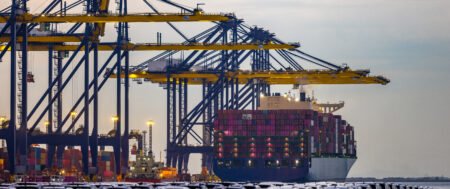
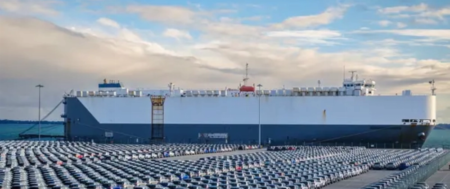
1.1 Ro-Ro (Roll-on/Roll-off): The "Floating Parking Lot"
Ro-Ro remains the standard for massive, high-volume shipments of new vehicles.
- The Pros: It is generally the fastest way to load and unload thousands of cars. It’s ideal for oversized commercial trucks or heavy machinery that won’t fit in a standard container.
- The Cons: Your vehicles are driven onto the ship and parked in massive hold decks. This exposes them to salt-heavy air and humidity for weeks. Furthermore, Ro-Ro routes are limited to major global ports. If your dealership is in a secondary market, Ro-Ro might not be an option.
1.2 Container Shipping: The "Fortress" (Our Recommended Choice)
For high-value SUVs like the Jetour T2 or sophisticated EVs like the BYD Han, container shipping is the gold standard.
- The Pros: Total protection from the elements. Once the container is sealed, your vehicle is shielded from salt spray, debris, and theft.
- The Evolution of 2026: We primarily utilize 40HQ (High Cube) containers. These offer extra vertical space, which is the key to our cost-saving strategies.
1.3 Land & Rail Transport: The "Silk Road" Advantage
For our partners in Central Asia (Kazakhstan, Uzbekistan) and Eastern Europe, the China-Europe Railway Express (CRE) has become a game-changer in 2026.
The Advantage: It is significantly faster than sea freight (often 12-18 days vs. 35-45 days) and more stable than road convoys. It’s the perfect middle ground for dealers who need to refresh their inventory quickly.
The "3-Units-Per-40HQ" Strategy: Slashing Your Freight Costs
This is where Evstrader provides a massive competitive edge for our B2B clients. The biggest complaint from international dealers is that shipping a large SUV or a wide EV is too expensive because a standard 40HQ container usually only fits two units. If you are paying $6,000 for a container, your per-unit logistics cost is $3,000.
The Racking Innovation
Our logistics team utilizes specialized heavy-duty steel racking systems. By precisely angling the first two vehicles, we create enough clearance to tuck a third vehicle into the rear of the container.
- The Result: You are now fitting 3 units into the same 40HQ container.
- The Math: That same $6,000 freight bill now averages out to **$2,000 per unit**.
- The Impact: You just saved $1,000 per car before even starting your local sales process. That is pure profit added back to your bottom line.
💡 Expert Tip: Not all cars can be “triple-loaded.” Our experts analyze the dimensions of your specific order (length, height, and wheel-base) to ensure a safe fit that complies with international maritime safety standards.
Securing the Cargo: Our "Zero-Damage" Protocol
A “cheap” shipping quote becomes the most expensive mistake of your life if the car arrives with a dented pillar or a shattered sunroof. At evstrader.com, we employ a multi-stage bracing protocol:
- Industrial Tie-Downs: We use 5-ton rated nylon webbing to secure each wheel to the container’s internal lashing points.
- Anti-Collision Buffers: We place specialized foam and air-cushion buffers between vehicles and near the container walls to prevent any movement during heavy seas.
- Moisture Control: Every container is equipped with industrial-grade desiccant bags to prevent “container rain” (condensation) from affecting the vehicle’s electronics and upholstery.
Quality Control & Third-Party Verification
Trust is built on transparency. Before any vehicle is loaded, we perform a Pre-Loading Inspection (PLI):
- 360° High-Res Video: You receive a full walkaround video of the vehicle in its “ready-to-load” state.
- The 150-Point Checklist: We verify battery health, fluid levels, and paint integrity one last time.
- Independent Certification: Upon request, we coordinate with CCIC or SGS for a third-party “Loading Supervision” report. This gives you an unbiased, legal document proving the condition of the cars as they were sealed into the box.
Navigating the Paperwork: Export Licenses & Documentation
The Chinese export process in 2026 is highly regulated. Minor errors in paperwork can lead to weeks of port delays and thousands in “Demurrage” fees. Our documentation desk handles the entire “Paper Trail”:
- Export License: We secure the official government permit for each vehicle.
- Certificate of Origin: Essential for proving the vehicle’s manufacturing roots and potentially lowering your local import duties.
- Bill of Lading (BOL): Your title to the goods while they are on the water.
- Customs Clearance: We manage the “Export Declaration” to ensure a smooth exit from major ports like Shanghai, Ningbo, or Tianjin.
Marine Insurance: Protecting the Investment
In the rare event of a maritime disaster or a port accident, you need more than just a “sorry.” We recommend and provide All-Risk Marine Insurance.
- Coverage: This covers everything from “General Average” (a maritime law term you never want to face without insurance) to minor scratches and mechanical malfunctions caused by transit.
- Peace of Mind: For a small fraction of the vehicle’s value, your entire investment is protected from the factory gate to your port of discharge.
Conclusion: Partner with the Logistics Masters
In 2026, importing a car from China is a sophisticated financial operation. You deserve a partner who understands that safe shipping is just as important as the car itself.
At Evstrader, we don’t just sell you a car and wish you luck. We design a logistics solution that maximizes your container space, slashes your per-unit costs, and ensures your inventory arrives in showroom condition.
Ready to optimize your next shipment?
→ Request a Custom Logistics Quote & Container Optimization Plan
Join the hundreds of global dealers who trust us to secure their supply chain.