Introduction: The New "Golden Rule" of the Used Car Trade
In the traditional internal combustion engine (ICE) market, the odometer was king. A car with 20,000 km was almost certainly “better” than one with 100,000 km. However, as we move through 2026, the global automotive trade has undergone a paradigm shift. In the world of Electric Vehicles (EVs), the odometer is merely a secondary data point.
The true value of a used EV—whether it’s a BYD Atto 3, a Zeekr 001, or a NIO ES6—resides in its Battery Health. For an international dealer, purchasing a used EV with a degraded battery is the equivalent of buying an ICE car with a cracked engine block. A battery replacement in 2026 can still cost between 35% and 50% of the vehicle’s total resale value.
At Evstrader, we have spent years refining the science of EV inspection. This guide will pull back the curtain on how professional exporters verify battery integrity, ensuring that your inventory remains a high-performing asset rather than a liability.
The Core Metrics — SOH vs. SOC
1.1 SOC (State of Charge): The "Fuel Gauge"
SOC tells you how much energy is currently in the battery (e.g., 80% charged). While useful for a test drive, it tells you nothing about the battery’s long-term viability. A car can be 100% charged but only have 70% of its original capacity left.
1.2 SOH (State of Health): The "Life Expectancy"
SOH is the most critical metric in 2026. It is a percentage that compares the current maximum capacity of the battery to its factory-new capacity.
The formula used by most Battery Management Systems (BMS) is:
1.2 SOH (State of Health): The "Life Expectancy"
SOH is the most critical metric in 2026. It is a percentage that compares the current maximum capacity of the battery to its factory-new capacity.
The formula used by most Battery Management Systems (BMS) is:

- 95% – 100%: Like-new condition. Ideal for premium resale.
- 90% – 94%: Normal wear for a 2-year-old vehicle.
- 85% – 89%: Significant usage; price negotiations should begin here.
- Below 80%: The “Red Zone.” In many markets, this is where capacity loss becomes noticeable to the driver and resale value plummets.
Professional Diagnostic Methods (The 2026 Standard)
As an expert exporter, you cannot rely on the seller’s word. You need raw data. Here are the three methods we use at Evstrsder to verify battery health.
2.1 OBD-II Data Extraction & BMS Interrogation
Every modern Chinese EV has a sophisticated BMS that logs thousands of data points. By using a professional-grade OBD-II scanner (such as the 2026-edition Launch or Autel units configured for Chinese NEVs), we can “talk” to the battery.
- Cell Voltage Differential: We check the voltage of individual cells. If one cell is at $3.6V$ while others are at $3.2V$, it indicates an imbalance or a “weak link” that could lead to premature pack failure.
- Cycle Count: We look at how many “full charge-discharge cycles” the battery has completed. A high cycle count relative to low mileage suggests the car was used for short, frequent trips with constant fast-charging—a recipe for degradation.
2.2 The DC Fast-Charge Thermal Test
We don’t just read data; we stress-test the hardware. We take the vehicle to a 120kW+ DC Fast Charger.
- What we look for: How does the battery handle heat? If the thermal management system struggles and the charging speed “throttles” (slows down) prematurely, it indicates internal resistance within the cells—a clear sign of aging.
- The Cooling Curve: A healthy battery should cool down rapidly after a fast-charge session. Lingering heat is a sign of inefficient chemistry.
2.3 V2L (Vehicle-to-Load) Discharge Analysis
Many 2026 Chinese models (like the BYD Song Plus or GAC Aion series) support V2L. We use specialized load-testing equipment to draw a steady 3kW of power from the car. By measuring the rate of SOC drop against the actual energy output, we can manually verify if the BMS’s reported SOH matches reality.
The "Silent Killers" of EV Batteries
When sourcing used EVs from the Chinese market, we look for environmental “Red Flags” that aren’t always visible on a report.
3.1 The "Fast-Charge Only" Lifestyle
China has the world’s most dense DC fast-charging network. While convenient, constant exposure to high-voltage “pumping” creates Lithium Plating on the anode. At Evstrader, we prioritize vehicles sourced from Tier-1 cities where owners had access to slow, AC home charging. AC-charged batteries almost always show 3-5% better SOH than DC-exclusive units.
3.2 Calendar Aging in High-Heat Regions
3.3 The 100% SOC Mistake
Lithium-ion batteries (especially NCM chemistry) are “stressed” when kept at 100% or 0% for long periods. We use diagnostic logs to see how often the car sat at full charge. If the previous owner consistently “topped off” to 100% every night, the battery will show accelerated degradation.
Brand-Specific Nuances (BYD, Zeekr, NIO)
In 2026, not all batteries are created equal. You must know the specific tech you are buying.
- BYD (Blade Battery / LFP): These are incredibly durable. They can handle more cycles and are less prone to thermal runaway. However, LFP batteries are notoriously difficult to estimate SOH for when they are between 20% and 80% SOC. We always charge a BYD to 100% to “reset” the BMS and get an accurate health reading.
- Zeekr/Geely (800V Systems): These cars charge incredibly fast. When buying a used Zeekr, we pay extra attention to the Coolant Health. Because they use high-voltage charging, any inefficiency in the cooling loops will have already caused battery “micro-stress.”
- NIO (Battery Swap Tech): NIO is a unique case for exporters. If you are buying a used NIO, you must verify if the battery is owned or leased (BaaS). The “health” of a NIO battery is less critical because it can be swapped, but for export markets without swap stations, you must ensure the battery currently in the car is a “High-Health” unit before it leaves China.
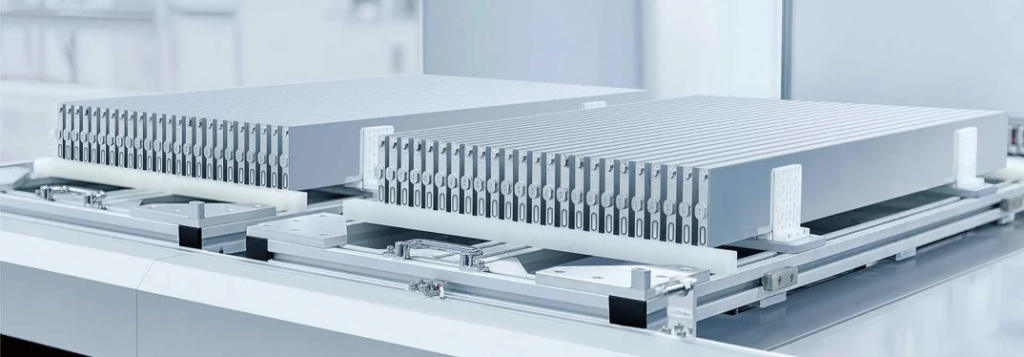
Evstrader Inspection Certificate
To protect our B2B partners, we don’t just provide a “thumbs up.” Every EV exported through our platform comes with a 2026 Digital Battery Passport. This includes:
- Direct BMS Screenshot: Showing SOH, Cycle Count, and Cell Voltage Balance.
- Temperature Log: Max and Min temperatures reached by the battery during its life.
- Physical Inspection: Verification that the battery casing has no scrapes or impact marks (which can lead to moisture ingress and fire risk).
Conclusion — Transparency Wins the Market
The used EV market is currently built on a foundation of “Information Asymmetry.” Most buyers are guessing. By partnering with Evstrader, you move from guessing to knowing.
Providing your local customers with a verified Battery Health Report isn’t just a “nice-to-have” service; it is the most powerful sales tool in your arsenal. It builds trust, justifies a premium price, and ensures that the vehicle stays on the road for another decade.
Stop fearing the battery. Start measuring it.