Buying an electric vehicle is only the first step in operating it successfully. For international dealers, distributors and fleet buyers importing vehicles from China, the more difficult question is often what happens after delivery: Can the correct spare part be identified? Can a local workshop read the vehicle’s systems? Will a replacement electronic module require coding? Who pays for parts, labour and freight if a fault appears?
An attractive purchase price can quickly lose its advantage when a minor collision, charging fault or unavailable component keeps a vehicle off the road for weeks. A workable after-sales plan should therefore be evaluated before the order is placed, not after the vehicles arrive.
This checklist explains how to assess Chinese EV spare-parts availability, VIN and OE-number matching, diagnostic access, software and calibration requirements, battery-repair boundaries, warranty responsibility and local workshop readiness.
Quick Answer: What Should Importers Confirm Before Ordering?
Before importing Chinese electric vehicles, buyers should confirm:
- How replacement parts will be identified for each VIN and vehicle configuration
- Which maintenance and fast-moving parts are available
- Expected lead times for ordinary, collision, electronic and high-voltage components
- Which diagnostic tool can access the vehicle’s main control systems
- Whether online accounts, subscriptions or manufacturer authorisation are required
- Who can perform module coding, initialisation and ADAS calibration
- Whether repair manuals, wiring information and technical support are available
- Who is responsible for warranty decisions, labour, freight and claims
- Whether the local workshop has appropriate EV and high-voltage capability
A vehicle is not fully ready for resale or fleet use until the importer has a practical parts, diagnostics and repair-support plan.
Why After-Sales Support Must Be Planned Before Importing
Vehicles are increasingly software-dependent, and EVs add high-voltage batteries, power electronics, charging systems and thermal-management components to the traditional maintenance environment. The same model name can also cover different market versions, trims, production dates and component revisions.
Without an after-sales plan, importers may encounter problems such as:
- A visually similar replacement part does not match the vehicle’s configuration.
- A generic scan tool reads a basic fault code but cannot access the affected control module.
- A new electronic module requires coding, pairing or initialisation after installation.
- A replaced camera or radar unit requires calibration before safety functions operate correctly.
- A domestic-market app, navigation service or online feature does not function abroad.
- A traction-battery component cannot be shipped by the originally planned method.
- A China-market warranty does not provide repair coverage in the destination country.
- The local workshop lacks repair information or appropriate high-voltage procedures.
These risks do not apply equally to every Chinese brand or model. Support depends on the manufacturer, market version, sales channel, vehicle age and destination. That is why the evaluation must be vehicle-specific.
What Counts as Chinese EV After-Sales Support?
“After-sales support” should not be treated as a vague promise. Importers need to separate it into defined services and responsibilities.
| Support Area | What the Importer Needs | Useful Evidence |
|---|---|---|
| Parts identification | VIN, configuration and OE-number matching | Catalogue screenshot, OE number and part photo |
| Parts supply | Availability, price, MOQ and lead time | Written quotation and stock status |
| Diagnostics | Defined system coverage and functions | Tool model, software version and coverage list |
| Repair information | Procedures, wiring information and specifications | Sample documentation and access terms |
| Software support | Coding, initialisation, updates and calibration path | Written workflow and responsible party |
| Technical assistance | Response channel, language and service hours | Support process and case example |
| Warranty | Issuer, scope, exclusions and claim process | Contractual warranty terms |
A supplier that says “parts and warranty available” has not yet answered the important questions. The buyer needs to know which parts, which vehicles, what access, what costs and who is responsible.
Which Spare Parts Should Importers Plan For?
A practical parts plan groups components by demand, repair urgency, cost and transport difficulty. It does not mean stocking every possible component.
Fast-Moving Maintenance and Wear Parts
- Cabin filters and other applicable service filters
- Brake pads and related wear components
- Wiper blades
- 12-volt batteries
- Common suspension and steering wear items
- Compatible tyres and tyre-pressure sensors
- Approved coolants, brake fluid and service consumables where applicable
These are often the best candidates for a starter stock because they are relatively predictable and may be needed across several vehicles.
Collision and Exterior Parts
- Bumpers, fenders and exterior trim
- Headlamps and taillamps
- Mirrors and mirror electronics
- Windscreens and other glass
- Doors, handles and related mechanisms
- Parking sensors, cameras and mounting hardware
Exterior parts may be bulky, fragile or configuration-specific. A headlamp can differ by steering side, region, lighting specification or production revision even when it looks similar in a photograph.
EV-Specific Components
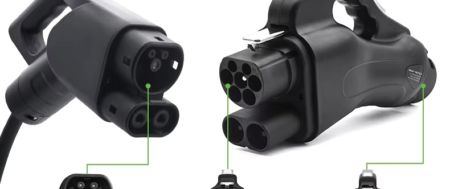
- Charging cables and portable charging equipment
- Charging-port assemblies
- Onboard chargers and DC/DC converters
- Electric air-conditioning compressors
- Cooling pumps, valves and thermal-management components
- High-voltage contactors, connectors and related service parts
- Battery-management and power-electronics components
These parts should not be ordered merely by appearance. Electrical rating, software version, connector type and vehicle configuration may all affect suitability.
Electronic and Control Components
- Electronic control units
- Body control modules
- Infotainment displays and head units
- Cameras, radar units and parking-control components
- Key, immobiliser and access-control modules
- Charging and battery control modules
Some replacement electronic components may require coding, software configuration, security access or pairing to the vehicle. Requirements differ by manufacturer and module, so they must be checked before purchase.
Build a Starter Spare-Parts Kit for the First Shipment
A starter kit can reduce early customer complaints and vehicle downtime, but it should be designed around the actual order rather than a generic parts package.
Consider:
- Number of vehicles and concentration by model
- New or used condition and average mileage
- Local road, dust, heat, humidity and driving conditions
- Distance from the dealer to service facilities
- Normal parts replenishment lead time
- Availability of verified local alternatives
- Cost of holding stock compared with vehicle downtime
- Transport restrictions affecting certain components
| Part Category | Planning Approach | Reason |
|---|---|---|
| Filters and routine wear parts | Consider basic local stock | Predictable demand and shorter service turnaround |
| Brake and suspension items | Stock according to fleet size and local conditions | Wear rate depends on mileage and road use |
| Charging cables | Keep verified replacements | High customer impact if lost or damaged |
| Lamps, mirrors and common trim | Consider limited stock for core models | Minor damage can delay retail delivery |
| Electronic modules | Usually order after diagnosis | Higher cost and configuration risk |
| Traction batteries | Do not stock without a technical, safety and logistics plan | High cost, storage requirements and dangerous-goods controls |
Do not publish a universal rule such as “two parts per ten vehicles.” A useful starter kit is based on the models, local operating environment and support strategy.
Why VIN and OE Part Numbers Matter
Model name, model year and part appearance are not reliable enough for many components. A single model may have several battery capacities, steering configurations, infotainment systems, sensors, lighting versions or supplier revisions.
Before ordering, provide:
- Complete vehicle identification number
- Model, trim and production date
- China-market or export-market version
- Left-hand-drive or right-hand-drive configuration
- Original OE part number and suffix
- Hardware and software identifiers where relevant
- Clear photographs of the original component, label and connectors
- Reason for replacement and diagnostic findings
The parts supplier should confirm whether the original number has been superseded and whether installation requires programming or additional components. For a bulk fleet, retain a VIN-to-configuration register so that future requests are not rebuilt from memory.
Generic OBD-II vs Brand-Level Diagnostics
A generic OBD-II scanner can be useful for basic fault-code reading and standard vehicle data, but it should not be confused with complete EV diagnostic access. Actual coverage depends on the tool, software, brand, model and market version.
| Function | Generic OBD-II Tool | Enhanced or Brand-Level Tool |
|---|---|---|
| Basic standard fault codes | Often available | Usually available |
| Manufacturer-specific codes | Limited or model-dependent | Broader access may be available |
| High-voltage battery data | Usually limited | Depends on supported model and software |
| Active component tests | Usually limited | May be supported |
| Service procedures | Limited | May include bleeding, resets or relearns |
| Module coding or initialisation | Generally unavailable | May require authorised online access |
| Software updates | Unavailable | Manufacturer and account dependent |
| ADAS calibration | Not performed by a basic scanner | Requires suitable diagnostic and calibration equipment |
Importers should request a coverage list for the exact vehicle rather than accept the phrase “supports Chinese cars.” Ask whether the tool can access the battery, charging, motor, thermal-management, brake, airbag, body, infotainment and driver-assistance systems.
Diagnostic Accounts, Online Access and Software Restrictions
Some diagnostic or programming functions may depend on manufacturer servers, subscriptions, regional accounts or security authorisation. This is not unique to Chinese vehicles, but it becomes particularly important when a vehicle is operated outside its original sales network.
Before selecting a model, ask:
- Can the diagnostic tool operate offline, and which functions require internet access?
- Who owns and controls the diagnostic account?
- Is the software available to independent workshops in the destination?
- Are subscriptions recurring, and what stops working when they expire?
- Are overseas login, language or payment restrictions relevant?
- Does programming require security approval or manufacturer credentials?
- Is remote technical assistance permitted and traceable?
- How are software updates, data protection and customer consent managed?
Do not build a commercial after-sales plan around cracked software, borrowed accounts or methods designed to bypass access controls. They may be unreliable, insecure and unsupported, and they can create additional legal or vehicle-safety risks.
Module Replacement, Coding and Calibration
Installing a replacement part does not always complete the repair. Depending on the vehicle and component, the workshop may need to perform:
- VIN or configuration writing
- Module pairing or security matching
- Key and immobiliser procedures
- Software configuration or parameter setting
- Steering-angle or ride-height calibration
- Camera, radar or surround-view calibration
- Electronic brake service procedures
- Battery, charging or thermal-system initialisation
- Fault-code clearing and post-repair functional testing
Before ordering a control module, confirm that it fits the vehicle, whether it is new or previously used, what programming is required, who can perform the work, and what happens if activation is unsuccessful.
High-Voltage Battery Repair and Replacement Boundaries
A traction battery should not be treated as an ordinary spare-parts order. Accurate diagnosis is needed to distinguish a battery-pack fault from a charger, wiring, cooling, sensor, low-voltage or control-system problem.
Importers should establish:
- Whether trained high-voltage personnel are available locally
- Whether the workshop has suitable isolation, test and personal-protection equipment
- What battery data and fault information can be accessed
- Whether the manufacturer permits pack-, module- or component-level service
- How replacement components will be identified and tested
- Whether programming or battery-system initialisation is required
- How removed batteries will be isolated, stored, transported or recycled
- Which party is responsible for dangerous-goods documentation and packaging
Lithium batteries are regulated as dangerous goods in transport. Acceptance depends on factors including battery type, energy rating, condition, packaging, test documentation and transport mode. Damaged, defective or recalled batteries can face additional restrictions. Always use a qualified dangerous-goods logistics provider and obtain route-specific confirmation before shipment.
ADAS, Infotainment and Connected Services
Driver-Assistance Systems
Replacement of a windscreen camera, radar unit, suspension part, steering component or body panel affecting sensor position may require calibration. The workshop may need approved targets, positioning equipment, level-floor conditions, wheel alignment and a compatible diagnostic procedure.
An importer should not promise that a replaced sensor will function correctly merely because the part fits physically.
Infotainment and Connectivity
For a China-market vehicle, confirm:
- Available display and voice languages
- Navigation-map coverage
- Mobile-app availability in the destination
- SIM, eSIM and network compatibility
- OTA update availability outside China
- Remote locking, climate and charging functions
- Account transfer or unbinding for used vehicles
- Data and privacy implications for customers
These services can depend on region, account status and manufacturer servers. They should be described to customers accurately rather than presented as guaranteed global functions.
Warranty: Who Is Actually Responsible?
“Manufacturer warranty” can mean very different things depending on the vehicle’s original market and export channel. A domestic warranty issued in China may not automatically pay for repairs performed by an overseas workshop.
The purchase contract should identify:
- The legal entity providing the warranty
- The covered vehicle VINs and start date
- Warranty duration and mileage limit
- Covered components and exclusions
- Whether diagnosis requires prior approval
- Who pays local labour, parts freight, duties and taxes
- Evidence required for a claim
- Claim review and response time
- Whether the remedy is repair, part replacement, reimbursement or another solution
- How disputes and unavailable parts are handled
A written warranty process is more useful than a broad promise such as “full after-sales support.” Dealers should also decide what warranty they will offer their own retail customers under local law.
Spare-Parts Shipping and Lead-Time Planning
Not every replacement component can travel through the same logistics channel. The parts plan should distinguish:
- Small ordinary parts suitable for express or air-freight evaluation
- Fragile lamps, glass and display components requiring protective packaging
- Large bumpers, body panels and trim with high dimensional freight cost
- Components containing liquids, pressurised devices or restricted materials
- Airbags and seat-belt pretensioners subject to dangerous-goods controls
- Lithium batteries and battery modules requiring specialist assessment
- High-value electronics requiring traceability and insurance
For each category, confirm packaging, classification, export and import documents, accepted transport mode, estimated lead time, destination charges and damage-claim process. Where permitted, ordinary starter parts may be consolidated with a vehicle shipment, but approval must be obtained before loading.
For a detailed vehicle-logistics comparison, see Vehicle Shipping from China: Container vs. Ro-Ro.
How to Evaluate a Supplier’s After-Sales Capability
Ask potential suppliers the following questions:
- Can you identify parts by VIN and provide the OE number before payment?
- Can you provide photographs of the actual or correctly matched component?
- Which common parts are currently in stock?
- What are the estimated lead times for ordinary, collision, electronic and high-voltage parts?
- Which diagnostic tools support the exact vehicle version?
- Which functions require an online account or manufacturer authorisation?
- Can you provide lawful technical or remote diagnostic assistance?
- Are repair procedures or wiring information available in a usable language?
- Who performs module coding, key matching and ADAS calibration?
- How are batteries and other dangerous-goods components transported?
- Who is the warranty provider, and what costs are covered?
- Can you show an anonymised example of a completed parts or technical-support case?
A supplier that can only say “all parts are available” has not demonstrated a working process. A credible answer should connect vehicle identity, part identification, quotation, delivery, installation and post-repair verification.
Importer’s Checklist Before Placing an Order
| Area | What to Confirm | Evidence to Request |
|---|---|---|
| Vehicle identity | VIN, version, trim and production date | VIN list and configuration record |
| Parts catalogue | OE-number lookup method | Catalogue or EPC example |
| Starter stock | Suitable routine and high-impact parts | Quotation and packing list |
| Diagnostics | Tool, software and system coverage | Model coverage and function list |
| Online access | Account, subscription and regional limits | Written access terms |
| Repair information | Procedures, wiring and specifications | Sample document or portal terms |
| Coding | Post-replacement programming path | Defined workflow and responsible party |
| ADAS | Local calibration capability | Equipment and workshop confirmation |
| Battery support | Diagnosis, repair and transport boundaries | Technical and logistics plan |
| Warranty | Issuer, scope and claim process | Contract terms |
| Lead time | Ordinary and restricted-part timelines | Category-based estimates |
| Local workshop | Personnel, tools and high-voltage safety | Workshop capability record |
Recommended After-Sales Plan by Buyer Type
Small Dealer
- Limit the first order to a manageable number of models and configurations.
- Prepare routine parts and verified replacement charging cables.
- Identify a local EV-capable workshop before retail sales begin.
- Keep a reliable China-side parts identification and purchasing contact.
- Describe overseas software and warranty limits clearly to customers.
Fleet Operator
- Standardise the fleet where possible to reduce parts complexity.
- Track downtime, fault codes, consumption and lead times.
- Stock selected high-use and high-impact components.
- Equip and train a central workshop or contract a qualified service partner.
- Establish an urgent-parts and technical-escalation process.
National Distributor
- Build a formal parts catalogue, inventory and warranty-claim system.
- Develop a trained repair network and technical-support team.
- Secure appropriate diagnostic, programming and calibration access.
- Plan software updates, recalls and customer communications.
- Define data protection and connected-service responsibilities.
FAQ
Are Chinese EV spare parts difficult to source?
Availability varies by brand, model, production date, market version and part category. Routine parts for widely used models may be straightforward, while electronic, body or high-voltage components can require VIN matching, longer lead times and specialist shipping.
Can a generic OBD-II scanner diagnose a Chinese EV?
It may read basic standard fault codes, but complete diagnosis can require enhanced or brand-level coverage. Battery, charging, body, ADAS and programming functions should be verified for the exact model.
Do Chinese EV parts need to be matched by VIN?
VIN matching is strongly recommended, especially for electronic, lighting, charging, safety and market-specific components. Also confirm the OE number, production date, connector and configuration.
Can a replacement electronic module be installed without coding?
Some components may work directly, while others require coding, pairing, initialisation or security access. Confirm the procedure before buying the part.
Is a China-market vehicle warranty valid overseas?
Do not assume that it is. Ask the warranty issuer to state where coverage applies, who can authorise repairs, and who pays for parts, labour and freight.
Can EV batteries and airbag components be shipped by air?
These items can be subject to dangerous-goods rules and carrier restrictions. Acceptance depends on classification, condition, packaging, documentation, route and transport mode. Use a qualified logistics provider rather than assuming ordinary air or courier service is available.
What spare parts should dealers order with their first shipment?
Start with verified routine service items and selected high-impact parts for the actual vehicle mix. The quantity should reflect fleet size, mileage, local conditions, lead time and downtime cost.
Plan Parts and Diagnostic Support Before You Import
EVstrader supports international dealers, distributors, rental businesses and fleet operators sourcing new and used vehicles from China. Depending on the selected models and available information, our team can help buyers collect vehicle identifiers, inspection records, parts references and practical shipment information before an order is finalised.
To discuss a sourcing and support plan, provide:
- Destination country
- Required brands, models and quantities
- New or used condition
- Expected annual mileage and operating environment
- Existing local workshop capability
- Requested starter parts or diagnostic information
- Target budget, trade term and purchasing schedule
Request Vehicle, Parts and Support Information