Introduction:The Great Automotive Migration
The year 2026 marks a historic turning point in the global automotive industry. What started as a niche market for affordable electric vehicles has transformed into a global paradigm shift. From the bustling streets of Riyadh to the mountainous terrains of Chile, Chinese vehicles are no longer just “present”—they are dominant.
For international car dealers, fleet managers, and private buyers, the question has shifted from “Are Chinese cars good?” to “How can I import them fast enough to meet demand?” In this 2,500-word deep dive, we will analyze the Return on Investment (ROI), the technological superiority of 2026 models, and the logistical secrets that make importing from China the most profitable venture in today’s used car market.

Section 1: The Economics of ROI—Why the Numbers Make Sense
1.1 The Pricing Paradox
1.2 High Resale Value and Low Depreciation
Section 2: Technological Superiority—Accessing the Future Today
2.1 The "Smart Cockpit" Revolution
If you sit inside a 2026 Jetour Dashing or a BYD Destroyer 05, you aren’t just looking at a car; you’re looking at a supercomputer on wheels. While many Japanese brands are still perfecting their touchscreen interfaces, Chinese OEMs have standardized:
- Snapdragon 8155/8295 Chips: Ensuring zero-lag infotainment.
- 540° Panoramic Views: Using “transparent chassis” technology for safer off-roading.
- AI Voice Assistants: Capable of controlling everything from the sunroof to the massage seats in multiple languages.
2.2 Leading-Edge Powertrains (DM-i and Beyond)
Section 3: Deep Dive into 2026’s Most Profitable Models
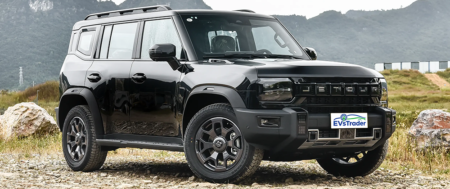
3.1 The Jetour T2 (The King of Off-Road Style)
The Jetour T2 has become a cult classic. Its rugged, military-inspired design appeals to the “Adventure” demographic.
- Why it’s worth importing: It looks like a $100,000 luxury SUV but costs a fraction of that. Its 2.0T engine and XWD system make it a genuine contender for desert and mountain driving.

3.2 Changan CS55 PLUS (The Family Workhorse)

3.3 Volkswagen ID.3 (The German Quality, Chinese Price)
Through joint ventures in China, the VW ID.3 produced in Shanghai is often more technologically advanced and cost-effective than its European-made counterparts. Importing these allows buyers to get “German Engineering” at “Chinese Factory Prices.”
Section 4: Quality Assurance—Addressing the Skeptics
4.1 Rigorous 150-Point Inspections
The used car export industry has matured. Reliable wholesalers now employ a “Triple-Check” system:
- Factory Diagnostics: Scanning the ECU for any hidden faults.
- Physical Integrity: Checking for frame damage, paint thickness, and flood history.
- Third-Party Certification: Agencies like CCIC (China Certification & Inspection Group) provide independent reports that are recognized globally.
4.2 The "15-Year Experience" Factor
When you partner with an established dealer with over a decade of experience and 17+ physical showrooms, you aren’t just buying a car; you’re buying a relationship. This ensures that the vehicle’s “Good Condition” isn’t just a marketing slogan—it’s a verified reality.
Section 6: Regional Market Insights for 2026
6.1 The Middle East (Saudi Arabia, UAE)
The demand for high-performance AC systems and desert-capable 4WDs makes the Jetour T2 and GWM Tank series incredibly profitable here.
6.2 Latin America (Brazil, Chile, Mexico)
With shifting tariffs, the focus here is on Hybrid (PHEV) models. The BYD Destroyer 05 and Song Plus are the current market leaders.
6.3 Central Asia & Russia
Durability in extreme cold is the priority. Changan’s cold-start technology and Jetour’s heated interior packages make them the go-to choices for these regions.
Section 7: Risks and How to Mitigate Them
Is it worth it? Yes, but only if you avoid the pitfalls.
- The “Scam” Dealer: Avoid “too good to be true” prices from dealers without physical addresses or history.
- Regulations: In 2026, many countries have updated emission standards. Ensure your exporter provides a COC (Certificate of Conformity).
- Spare Parts: Always choose brands that have an established “Global Parts Network.” Changan and Geely are excellent in this regard.
Conclusion: The Verdict for 2026
Importing a car from China in 2026 is no longer a “gamble”—it is a sophisticated, data-driven business strategy. With the right partner, the ROI is unparalleled in the current automotive landscape. You are getting:
- Leading Technology that surpasses legacy brands.
- Rugged Reliability tested in extreme environments.
- Exceptional Margins due to optimized logistics.
The world is moving toward Chinese automotive excellence. Whether you are adding to your personal garage or expanding your dealership’s inventory, the time to act is now.
Final Call to Action (CTA)
Ready to scale your business with the best of Chinese automotive engineering? Explore our 2026 inventory of Used Jetour, Changan, and BYD models. With 15 years of export expertise, we handle the inspection, the paperwork, and the shipping—so you can focus on the profit.
[Contact Our Export Experts Today]
Frequently Asked Questions (FAQ)
1. Is it legal and safe to import a used car from China in 2026?
2. How long does the shipping process take, and what is the best method?
- Container Shipping (40HQ): Ideal for premium SUVs like the Jetour T2, as it offers the best protection. We can often fit 3 units per container to save you up to 30% in freight costs.
- Ro-Ro (Roll-on/Roll-off): Most cost-effective for large-scale commercial fleets or oversized vehicles.