Shipping vehicles internationally is not simply a choice between the lowest ocean-freight quotations. For importers buying new or used cars from China, the right method depends on the vehicle dimensions, order quantity, running condition, destination port, sailing availability, cargo-protection needs and carrier rules.
The two main options are container shipping and Roll-on/Roll-off (Ro-Ro) shipping. Each can be practical, but neither is automatically cheaper, safer or faster for every order. This guide explains how the two methods work, what costs importers should compare and what additional checks are required when shipping electric vehicles from China.
Quick Answer: Should You Choose Container or Ro-Ro Shipping?
Container shipping is usually a strong starting option for high-value vehicles, small or mixed-model orders, vehicles requiring enclosed transport and shipments that may include approved spare parts. It may also be considered for non-running vehicles when suitable loading equipment and carrier approval are available.
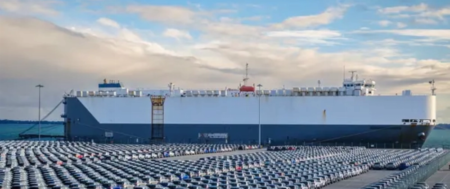
Ro-Ro shipping is often suitable for operable vehicles, larger fleet orders and oversized vehicles when both the Chinese departure port and destination port have an appropriate Ro-Ro service. The vehicle is driven onto a purpose-built vessel and driven off at the destination terminal.
The final choice should be based on a route-specific comparison rather than a general rule.
| Shipment Situation | Option to Evaluate First |
|---|---|
| One or several high-value vehicles | Container |
| A large fleet of operable vehicles | Ro-Ro |
| Mixed vehicles and approved parts | Container |
| Oversized but operable vehicles | Ro-Ro, subject to route availability |
| No suitable Ro-Ro call at the destination | Container |
| A non-running vehicle | Container, subject to loading and carrier approval |
These are starting points, not universal rules. Obtain confirmation for the exact vehicles, ports, sailing date and carrier before making a payment or delivery commitment.
How Does Vehicle Shipping from China Work?
A typical vehicle export shipment includes several connected stages:
- Vehicle and route confirmation: The buyer confirms the models, quantity, condition, dimensions, destination country and preferred port.
- Inland delivery in China: Vehicles are transported from the supplier, storage yard or inspection centre to the nominated departure port.
- Export preparation: Commercial documents, vehicle records and carrier-required declarations are checked before port entry.
- Port and loading operations: The vehicles are either loaded and secured inside a container or handed over to the Ro-Ro terminal.
- Ocean transport: The shipment travels directly or through one or more transshipment ports.
- Destination handling: The importer or appointed customs broker completes clearance, pays applicable charges and arranges vehicle collection or inland delivery.
Delays or unexpected costs can arise at any stage. Importers should therefore ask what is included in the quotation and who is responsible for inland transport, export handling, ocean freight, insurance, destination charges and final delivery.
What Is Container Vehicle Shipping?
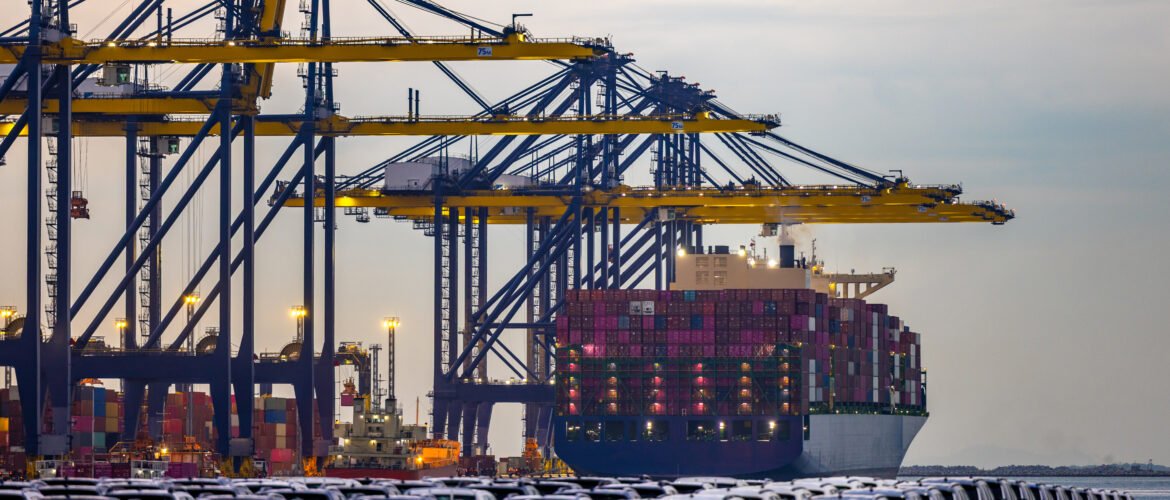
With container shipping, vehicles are loaded into a 20-foot, 40-foot or 40-foot high-cube container, depending on the shipment plan. They must be positioned and secured using a suitable loading method before the container is sealed and handed to the shipping line.
Advantages of Container Shipping
- The vehicle remains inside an enclosed container during the ocean voyage.
- It can suit small batches, mixed-model orders and vehicles requiring additional protection.
- Approved spare parts or accessories may sometimes be shipped in the same container, subject to customs, carrier and dangerous-goods rules.
- Container services are available through many international ports.
- Loading, securing, sealing and condition records can be documented for the buyer.
Limitations of Container Shipping
- Professional loading and securing are required.
- Loading, unloading and container handling introduce additional operations.
- Large SUVs, pickup trucks and vans can reduce the number of vehicles that fit safely.
- The destination may charge for container handling, devanning, equipment use, storage or delayed container return.
- Poor loading or inadequate securing can damage vehicles even when the container itself remains intact.
Importers should not accept a fixed claim that every 40HQ container holds the same number of cars. Capacity depends on the length, width, height and weight of each vehicle, the approved loading system, securing clearances and carrier requirements.
What Is Ro-Ro Car Shipping?
Ro-Ro means Roll-on/Roll-off. An operable vehicle is driven through a ramp onto a specialised vessel, parked and secured on a vehicle deck, and driven off after arrival. The booking is commonly based on the vehicle's dimensions, weight or measurement under the carrier's tariff.
Advantages of Ro-Ro Shipping
- Vehicles can be loaded without container stuffing and destination devanning.
- It is often practical for large batches of operable vehicles.
- Large SUVs, buses, trucks and equipment may be easier to accommodate, depending on vessel and route limits.
- Fewer container-handling steps may simplify terminal operations.
- The unit cost may be competitive on suitable high-volume routes.
Limitations of Ro-Ro Shipping
- Both ports must have a suitable service, and sailings may be less frequent than container services.
- The vehicle generally needs to start, steer, brake and move safely under the carrier's rules.
- Loose personal items and unapproved spare parts are usually restricted.
- Terminal receiving deadlines and vehicle-condition rules must be met.
- Alternative-fuel and used-electric-vehicle acceptance can differ significantly between carriers and routes.
Ro-Ro does not mean that vehicles travel exposed on an open deck. Purpose-built car carriers use internal vehicle decks, but the handling chain and access arrangements are different from those of a sealed container.
Container vs. Ro-Ro Shipping: Detailed Comparison
| Factor | Container Shipping | Ro-Ro Shipping |
|---|---|---|
| Vehicle condition | May accommodate a non-running unit with an approved loading plan | Usually requires an operable vehicle |
| Transport environment | Vehicle is enclosed inside a sealed container | Vehicle is secured on an internal vessel deck |
| Typical shipment profile | Small, mixed or protection-sensitive batches | Operable vehicles and larger fleet movements |
| Large vehicles | Dimensions may sharply reduce container capacity | Often practical, subject to deck and route limits |
| Port availability | Broad container-network coverage | Limited to suitable Ro-Ro ports and sailings |
| Loading process | Requires positioning, securing and sealing | Vehicle is driven aboard and secured |
| Parts and accessories | May be possible with written approval | Usually more restricted |
| Destination handling | May require devanning and container return | Vehicle is released through the terminal process |
| Cost basis | Container freight plus loading and handling | Often based on vehicle dimensions or volume |
| Schedule | Depends on container service and transshipment | Depends on Ro-Ro vessel calls |
To make a meaningful comparison, request both quotations using the same vehicle list, departure port, destination port, shipment period and trade term. Otherwise, a lower headline rate may simply exclude more local or destination charges.
Which Shipping Method Costs Less?
There is no permanent answer. Freight markets, fuel surcharges, port congestion, seasonal capacity and route availability can change. Vehicle dimensions and utilisation are equally important: a container that is efficiently loaded may offer a different unit cost from one carrying a single oversized SUV.
Possible Container Cost Components
- Vehicle collection and inland transport in China
- Container ocean freight
- Loading, lashing and securing materials
- Terminal handling and export declaration
- Documentation and carrier surcharges
- Marine cargo insurance
- Destination terminal and devanning charges
- Storage, demurrage or detention when applicable
- Final inland delivery
Possible Ro-Ro Cost Components
- Vehicle collection and delivery to the Ro-Ro terminal
- Ocean freight based on vehicle details
- Origin terminal, handling and documentation fees
- Alternative-fuel or other carrier surcharges when applicable
- Marine cargo insurance
- Destination vehicle handling, storage and release fees
- Final inland delivery
The lowest ocean-freight figure is not necessarily the lowest total logistics cost. Ask for a written inclusion-and-exclusion list, and confirm which destination charges must be paid directly to the terminal, agent or customs broker.
How Vehicle Size and Order Quantity Affect the Choice
Three variables have a major impact on shipping efficiency:
1. Vehicle Dimensions
Large SUVs, pickups and vans occupy more floor space and may require greater clearance for safe loading. A small difference in height or width can change the entire container plan. Accurate model, trim and dimension data are therefore required before a reliable quotation is issued.
2. Order Quantity
A small order may not fully utilise a container, while a larger order can distribute fixed loading costs across more vehicles. Conversely, a fleet of operable vehicles may justify comparing available Ro-Ro services. The comparison should use cost per shipped vehicle and total destination cost, not only the price of the ocean leg.
3. Mixed-Model Orders
Dealers frequently combine sedans, SUVs, BEVs and PHEVs in one purchase. These orders require a model-by-model loading check. Do not assume that a loading plan used for one group of cars will work for a different combination.
Special Requirements for Shipping Electric Cars from China
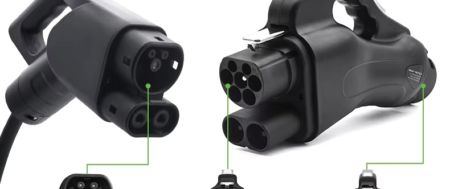
Electric-vehicle acceptance is carrier-specific. The shipment team should disclose the propulsion type—BEV, PHEV, EREV, conventional hybrid or internal-combustion vehicle—at the quotation and booking stage.
For an electric or plug-in hybrid vehicle, verify:
- Whether the carrier accepts that vehicle type, age and condition
- Whether used BEVs are accepted on the selected service
- The carrier's permitted state-of-charge range
- Whether the traction battery shows damage, leakage, overheating, warning lights or recall status
- Whether the vehicle has been involved in an accident affecting the battery system
- Required dangerous-goods declarations and supporting vehicle information
- Whether the vehicle can enter transport mode and move safely
- How charging cables, portable chargers and spare batteries must be declared
Do not rely on one universal battery-percentage rule. For example, one major Ro-Ro operator states that vehicles loaded on its vessels must be below 50% state of charge, while its current cargo instructions also restrict the loading of used BEVs. Other lines publish different booking and dangerous-goods requirements. The applicable instructions must therefore be obtained for the exact carrier and sailing.
How Should Vehicles Be Protected Before Shipment?
Protection begins before the vehicle reaches the vessel. A clear handover record reduces disputes and gives the buyer evidence of the vehicle's condition at dispatch.
- Record the VIN, mileage, dashboard warnings and visible condition.
- Take dated photos or video of the exterior, interior, wheels, glass and charging port.
- Remove loose and unauthorised items from the cabin and luggage area.
- Check that windows, doors, bonnet, boot and charging-port covers close correctly.
- Use an approved wheel-securing and lashing method for container loading.
- Protect vulnerable surfaces where necessary without covering required labels or VIN information.
- Photograph the loading arrangement, securing points, container number and seal number.
- Retain the terminal handover or condition record for Ro-Ro shipments.
Marine cargo insurance should also be reviewed carefully. Importers should understand the insured value, covered risks, deductible, exclusions, evidence required for a claim and the deadline for reporting damage.
Which Shipping Documents Should Importers Confirm?
The exact document set depends on the destination, vehicle status and trade term, but the shipment may involve:
- Commercial invoice
- Packing list or vehicle list
- Bill of lading
- Export declaration documents
- Certificate of origin when required
- Vehicle registration, title or cancellation/export records where applicable
- Insurance certificate
- Inspection or vehicle-condition records
- Battery, dangerous-goods or alternative-fuel declarations required by the carrier
- Destination-country conformity or import documents
Before paying a deposit, the importer should ask a licensed local customs broker to confirm import eligibility, vehicle-age limits, steering-side rules, emissions or conformity requirements, duties, taxes and the required original documents. A successful export from China does not by itself guarantee that a vehicle can be registered in the destination country.
Common Vehicle-Shipping Mistakes
- Comparing only ocean freight: Origin handling, destination charges and inland delivery may change the result.
- Using estimated vehicle dimensions: Incorrect data can invalidate a container plan or Ro-Ro quotation.
- Assuming fixed container capacity: Capacity must be calculated for the actual model mix.
- Ignoring vehicle operability: A vehicle that cannot move safely may not meet Ro-Ro acceptance rules.
- Failing to declare an EV or PHEV correctly: Carrier instructions must be checked before booking.
- Choosing a port without checking service: The nearest port is not always connected to the required route.
- Leaving insurance until the final stage: Coverage should be agreed before the shipment begins.
- Missing condition evidence: Without dispatch photos and handover records, damage claims become harder to support.
- Misunderstanding FOB or CIF: These terms do not automatically include every destination charge.
- Ignoring free-time deadlines: Delayed clearance can cause storage, demurrage or detention charges.
Real Shipment Example: 30 Used EVs Sent to the Middle East
A completed shipment provides more useful evidence than a general promise. In one EVstrader project, 30 certified used electric vehicles were prepared for container dispatch to the Middle East. The work included vehicle matching, condition control, loading coordination, lashing records and dispatch documentation.
The case demonstrates why a bulk shipment requires more than booking freight. Each vehicle must match the commercial list, the loading configuration must suit the model mix and the buyer should receive records that connect individual vehicles to the shipment.
View the 30-unit used EV container shipment case study.
Vehicle Shipping Quote Checklist
Provide the following information to obtain a more useful container and Ro-Ro comparison:
- Destination country and preferred port
- Vehicle brand, model, trim and model year
- New or used condition
- BEV, PHEV, EREV, hybrid or fuel vehicle
- Quantity of each model
- Accurate dimensions and weight
- Whether every vehicle starts, steers and brakes normally
- Vehicle location in China
- Required shipping period
- Any spare parts or accessories proposed for shipment
- Preferred insurance basis
- Required trade term, such as FOB or CIF
With complete information, the supplier and logistics team can compare available ports, carrier acceptance, loading efficiency, estimated schedules and the main charge categories.
Frequently Asked Questions
Is Ro-Ro cheaper than container shipping?
Not always. Ro-Ro can offer an attractive unit cost for operable vehicles on suitable routes, while efficient multi-vehicle container loading can also be competitive. Compare the same vehicles, ports, shipment period and included charges.
How many cars fit in a 40HQ container?
There is no universal number. Capacity depends on the dimensions and weight of each vehicle, the model mix, loading system, securing requirements and carrier rules. Request a loading plan based on the exact vehicles.
Can used electric cars be shipped by Ro-Ro?
Possibly, but acceptance varies. Some operators or services may restrict used BEVs, damaged batteries or certain vehicle conditions. Obtain written carrier confirmation before delivery to the port.
Can a non-running car be shipped from China?
Container shipping may be considered if appropriate equipment, loading access and carrier approval are available. The importer should disclose the condition before receiving a quotation.
Is container shipping safer for cars?
A sealed container provides an enclosed transport environment and controlled loading record. However, safe arrival still depends on correct loading, securing, handling and insurance. Ro-Ro vessels are purpose-built for wheeled cargo, so the best risk profile depends on the actual shipment.
How long does it take to ship a car from China?
Transit time depends on the departure and destination ports, direct or transshipment service, carrier schedule, port congestion, documentation and customs clearance. Ask for an estimated schedule rather than a guaranteed global transit time.
What is required for a vehicle shipping quotation?
At minimum, provide the model, quantity, dimensions, vehicle condition, propulsion type, location in China, destination port, expected shipment date and requested trade term.
Request a Vehicle Shipping Plan from China
EVstrader supports international dealers, distributors, rental companies and fleet buyers sourcing new and used vehicles from China. Send us your vehicle list, destination port, order quantity and preferred trade term. Our team can help compare available container and Ro-Ro options for the specific shipment.
Request Shipping Options and Current FOB/CIF Pricing
Vehicle acceptance, freight rates, sailing schedules and import requirements can change. All details should be reconfirmed with the carrier, freight forwarder and destination-country customs professionals before an order or booking is finalised.