How to Inspect a Used Chinese EV Before Export: A Buyer’s Checklist
Buying a used electric vehicle from China requires more than checking the price, mileage and exterior photos. Battery condition, accident repairs, charging performance, diagnostic faults, software access and export documents can all affect whether the vehicle can be registered, resold and supported after it arrives.
Once a vehicle has been shipped internationally, resolving an undisclosed problem becomes more expensive. The importer may need to arrange local diagnostics, source replacement parts or wait for remote technical support. A structured pre-shipment inspection can reduce these risks before payment and export.
This checklist explains what overseas dealers, fleet operators and vehicle wholesalers should inspect—and what evidence they should request—before importing a used Chinese electric vehicle.
Quick Summary
- Match the VIN and vehicle information with all available documents.
- Check the body, underbody and battery area for previous damage.
- Do not judge battery condition from the displayed driving range alone.
- Test both vehicle functions and the charging system.
- Use a compatible diagnostic tool to check current and stored fault codes.
- Verify software language, account binding and available keys.
- Request dated photos, videos and reports before shipment.
- Complete the agreed inspection before final payment whenever possible.
Why Pre-Shipment Inspection Matters
Used EVs can appear similar in listing photos while having very different condition, usage history and after-sales requirements.
A low purchase price may be offset by:
- Undisclosed accident or underbody damage;
- Battery degradation or battery-system faults;
- Charging problems;
- Missing keys, cables or accessories;
- Unresolved diagnostic codes;
- Previous-owner account binding;
- Unavailable software or overseas connected services;
- Incorrect or inconsistent vehicle documents;
- Parts that are difficult to source in the destination market.
An inspection cannot guarantee that a used vehicle will never develop a problem. Its purpose is to document the vehicle's known condition, identify visible or detectable risks and help the buyer make a better-informed decision.
1. Verify the Vehicle Identity and Documents
The first step is confirming that the physical vehicle matches the quotation, registration information and export documents.
Check the following information:
- Vehicle Identification Number (VIN);
- Brand and model;
- Trim level;
- Production date;
- First registration date, if applicable;
- Powertrain type;
- Battery capacity shown in available records;
- Motor or engine information where applicable;
- Exterior colour;
- Current mileage;
- Registration and ownership status.
Where to Check the VIN
Depending on the vehicle, the VIN may appear on:
- The lower part of the windscreen;
- The driver's door frame;
- A manufacturer identification plate;
- The body or chassis;
- The registration document;
- The vehicle information screen;
- The commercial invoice and export documents.
The VIN and vehicle description should be consistent across the physical vehicle and relevant documents. Any mismatch should be investigated before payment or shipment.
Online VIN tools may provide useful supporting information, but their coverage varies by manufacturer and country. They should not replace physical VIN and document verification.
2. Check for Accident, Structural and Body Damage
A repaired bumper or repainted panel does not always mean that a vehicle is unsafe. However, structural damage, poor repair work or damage near the battery pack may materially affect safety and resale value.
Exterior areas to inspect
- Paint colour and finish differences;
- Uneven panel gaps;
- Misaligned doors, bonnet or tailgate;
- Overspray on rubber seals and trim;
- Different production dates on windows or lights;
- Damaged mounting points;
- Cracks in lamps, cameras or sensor covers;
- Scratches, dents and corrosion;
- Tyre and wheel damage;
- Signs that airbags or seat-belt systems have been replaced.
Structural areas to inspect
- Front and rear chassis areas;
- Door pillars;
- Floor and underbody;
- Suspension mounting points;
- Welds and seam sealant;
- Battery pack housing;
- Battery protection plate;
- High-voltage cable protection areas.
Importers should request underbody photographs or video. General sales photos taken from standing height may not reveal damage below the vehicle.
3. Look for Signs of Water or Flood Exposure
Water exposure can affect electrical connectors, sensors, control modules, interior wiring and high-voltage components. Some evidence may remain even after the interior has been cleaned.
Possible warning signs include:
- Unusual musty odour;
- Moisture below carpets or inside the spare-wheel area;
- Rust on seat rails, bolts or electrical connectors;
- Mud or sediment in concealed areas;
- Water marks behind interior panels;
- Corrosion inside charging ports;
- Multiple unrelated electrical faults;
- Recently replaced interior trim without a clear explanation.
Visible water marks alone may not establish the full history of the vehicle. If flood exposure is suspected, the buyer should request a more detailed electrical and high-voltage inspection.
4. Inspect the Interior and Electrical Equipment
The interior condition can help buyers evaluate how the vehicle was used and whether the displayed mileage appears consistent with physical wear.
Interior checks
- Seat condition and adjustment;
- Steering-wheel and pedal wear;
- Dashboard and trim condition;
- Seat belts and warning indicators;
- Air-conditioning and heating;
- Electric windows and mirrors;
- Central locking;
- Interior and exterior lighting;
- Wipers and washers;
- USB and charging ports;
- Cameras and parking sensors;
- Electric tailgate, where fitted;
- Infotainment and instrument displays.
Every warning light should illuminate and then respond normally during vehicle startup. A warning light that never appears may require further investigation, especially if the system is expected to perform a startup check.
5. Cross-Check the Mileage and Usage History
The dashboard mileage is important, but it should not be evaluated in isolation.
Compare the displayed mileage with:
- Registration and service dates;
- Available maintenance records;
- Diagnostic information, where available;
- Tyre condition;
- Brake and suspension wear;
- Driver's seat condition;
- Steering-wheel and pedal wear;
- Previous inspection or sales records.
Differences do not automatically prove mileage manipulation, because parts may have been replaced and vehicle usage varies. The purpose is to identify inconsistencies that require an explanation.
6. Evaluate Battery Condition
The traction battery is one of the most valuable components in an electric vehicle. Battery condition can affect usable range, charging performance, resale value and future repair costs.
Electric vehicle batteries naturally age with time and use. Battery life can also be influenced by climate, charging patterns, battery chemistry and thermal management.
Battery information to request
- State of Health (SoH), when supported by the vehicle or diagnostic system;
- Current State of Charge (SoC);
- Battery-related fault codes;
- Cell-voltage information, when available;
- Battery temperature information;
- Charging history, if accessible;
- Battery warranty status;
- Previous battery repair or replacement records;
- Physical condition of the battery housing;
- Signs of underbody impact, leakage or corrosion.
Displayed Range Is Not the Same as Battery SoH
The range displayed on the dashboard is an estimate. It can change according to recent driving style, temperature, air-conditioning use, road conditions and software calculations.
For this reason, a dashboard showing a high estimated range should not be used as the only evidence of battery health.
Ask How the SoH Figure Was Obtained
If a seller provides a battery SoH percentage, the buyer should ask:
- Which device or software produced the figure?
- Was the result read directly from the battery management system?
- When was the test performed?
- What was the battery temperature and charge level?
- Is the report linked to the vehicle VIN?
- Are there any battery-system fault codes?
Different vehicles and testing methods may calculate or report battery condition differently. A single percentage should be interpreted together with diagnostics, charging performance and physical inspection.
Related guide: Electric Vehicle Battery Health Guide for Importers .
7. Test the Charging System
A vehicle that drives normally can still have a damaged charging port, communication fault or onboard charging problem. The charging system should therefore be tested separately.
Charging-port inspection
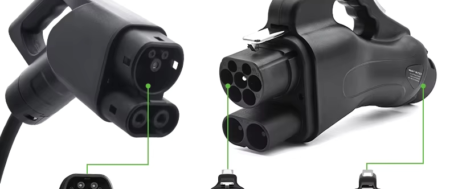
- Connector type;
- Port cover and locking mechanism;
- Bent, damaged or corroded pins;
- Signs of overheating;
- Water or contamination;
- Loose components;
- Condition of the supplied charging cable.
Functional charging test
Where facilities are available, confirm:
- The vehicle recognises the charger;
- Charging starts normally;
- The connector locks correctly;
- No charging fault appears;
- The charging session remains stable;
- The vehicle displays charging information;
- Charging can be stopped and disconnected normally;
- AC and DC charging work, if both can be tested.
A short charging test cannot prove long-term battery performance, but it can identify obvious charging-port, communication and system faults.
Importers should also confirm that the vehicle's charging standard is suitable for the destination market.
Related guide: Chinese EV Charging Compatibility: GB/T, CCS2 and Importer Checks .
8. Run a Diagnostic Scan
A clean dashboard does not necessarily mean that the vehicle has no stored faults. Some problems may be recorded as historical, intermittent or pending diagnostic trouble codes without keeping a warning light continuously active.
A suitable diagnostic scan may cover:
- Battery management system;
- Vehicle control unit;
- Motor controller;
- Onboard charger;
- DC-to-DC converter;
- Thermal management system;
- Airbag system;
- ABS and stability control;
- ADAS cameras and sensors;
- Infotainment and communication modules;
- Charging-system faults.
Do Not Accept Only a “No Warning Light” Statement
Request the diagnostic report or a video showing the scanning process where possible. The report should ideally identify:
- The vehicle or VIN;
- The scan date;
- The control modules checked;
- Current fault codes;
- Stored or historical fault codes;
- Codes cleared during the inspection;
- Codes that return after a road or charging test.
Clearing a code does not repair its underlying cause. If a fault is cleared, the vehicle should be tested again to see whether it returns.
9. Check the Software and Previous-Owner Account
Modern EVs may use manufacturer accounts for app access, digital keys, remote air conditioning, charging control and vehicle location.
Before export, check:
- Infotainment language;
- Instrument-cluster language;
- Installed software version;
- Pending software updates;
- Previous-owner account binding;
- Digital keys;
- Availability of the manufacturer app;
- Navigation coverage;
- Apple CarPlay or Android Auto support;
- Functions that may be restricted outside China.
A factory reset may remove information stored on the screen but may not remove server-side account binding. Request confirmation that the previous owner has released the vehicle where required.
Related guide: Chinese EV Software, App and OTA Access .
10. Carry Out a Road Test
A road test helps confirm whether the vehicle behaves normally under actual driving conditions.
Items to check during the road test
- Vehicle startup;
- Acceleration and power delivery;
- Braking performance;
- Regenerative braking;
- Steering alignment;
- Suspension noise;
- Wheel or tyre vibration;
- Drive-mode operation;
- Air-conditioning performance;
- Instrument and warning messages;
- Parking sensors and cameras;
- ADAS warnings and visible faults;
- Noise from the drivetrain or underbody.
The road test should be conducted safely and in accordance with local rules. A short test cannot reproduce every operating condition, but it can reveal obvious drivability and system problems.
11. Confirm Keys, Charging Equipment and Accessories
Missing accessories may appear minor during purchasing but can create delays and additional cost after the vehicle arrives.
Confirm the presence and condition of:
- All physical keys;
- Emergency or mechanical key;
- Charging cable;
- Portable charging equipment, if included;
- Charging adapters included in the quotation;
- Wheel-lock key;
- Tyre repair kit or spare wheel, where applicable;
- Jack and basic tools, where applicable;
- Warning triangle;
- Owner manual;
- Parcel shelf and removable interior accessories.
The quotation should state which accessories are included. Do not rely only on accessories visible in catalogue or promotional images.
What Evidence Should the Importer Request?
Inspection evidence should be clear enough for the overseas buyer to identify the vehicle and understand when the inspection was completed.
| Inspection Area | Evidence to Request | Purpose |
|---|---|---|
| Vehicle identity | VIN plate and document photographs | Confirm vehicle and document consistency |
| Exterior condition | Photos of all sides and close-ups of damage | Record scratches, dents and panel condition |
| Underbody | Underbody and battery-housing photos | Identify impact, corrosion or battery-area damage |
| Interior | Seats, dashboard, screens and trim photos | Assess wear and equipment condition |
| Mileage | Instrument-cluster photo or video | Record displayed mileage and warnings |
| Battery | Battery report or diagnostic screenshots | Review available battery condition information |
| Charging | Video showing charger connection and charging | Confirm basic charging operation |
| Diagnostics | Full-system scan report | Review current and stored faults |
| Road test | Road-test video and inspector notes | Record basic drivability |
| Software | Video of language, version and account screens | Confirm digital-function status |
| Accessories | Photo of keys, cables and supplied items | Confirm what will be shipped |
| Final condition | Dated photos before loading | Create a pre-shipment condition record |
Pre-Shipment Inspection Checklist
| Check | What to Confirm | Status |
|---|---|---|
| VIN and documents | Vehicle and document information match | Pass / Review |
| Body and structure | No undisclosed major or structural damage | Pass / Review |
| Underbody and battery housing | No obvious impact, leakage or severe corrosion | Pass / Review |
| Water exposure | No unexplained signs of flood or water damage | Pass / Review |
| Mileage | Displayed mileage is documented and reasonably consistent | Pass / Review |
| Battery | Available battery data and physical condition reviewed | Pass / Review |
| Charging | Charging starts without an obvious fault | Pass / Review |
| Diagnostics | Current and stored fault codes reviewed | Pass / Review |
| Road test | Braking, steering and drivetrain behave normally | Pass / Review |
| Software and account | Language, version and account status documented | Pass / Review |
| Keys and accessories | Included items match the quotation | Pass / Review |
| Final photos | Vehicle condition recorded before shipment | Pass / Review |
Red Flags Importers Should Not Ignore
- The supplier will not provide a clear VIN photograph;
- The vehicle details do not match the documents;
- Only edited sales photos are available;
- No underbody or battery-housing inspection is allowed;
- A battery SoH figure is provided without explaining the test method;
- The charging system cannot be tested;
- Fault codes are cleared without explanation or retesting;
- The previous-owner account remains connected;
- Only one key is supplied when two were promised;
- The seller requests final payment before completing the agreed inspection;
- Visible damage is described differently across the quotation and inspection report.
When Should the Inspection Be Completed?
The inspection should ideally be completed after the exact vehicle has been identified but before final payment and shipment.
A practical sequence is:
- Confirm the required model, specification and destination;
- Identify the exact vehicle and VIN;
- Agree on the inspection scope;
- Complete physical, charging and diagnostic checks;
- Send the buyer the inspection evidence;
- Confirm any disclosed damage or required repairs;
- Approve the final vehicle condition;
- Complete payment under the agreed terms;
- Record the condition again before loading;
- Arrange export and shipping.
The inspection scope and payment terms should be written into the commercial agreement wherever possible.
How EVstrader Supports Pre-Shipment Vehicle Checks
EVstrader helps overseas dealers, fleet buyers and vehicle wholesalers source and evaluate Chinese electric and plug-in hybrid vehicles.
Depending on the agreed inspection scope and vehicle model, support may include:
- VIN and document verification;
- Exterior and interior condition records;
- Instrument and warning-light checks;
- Vehicle photo and video collection;
- Available diagnostic scanning;
- Charging-function checks where facilities are available;
- Key and accessory confirmation;
- Pre-loading condition records;
- Coordination of export documents and shipping.
The exact inspection services and available diagnostic data should be confirmed for each model before the order is finalised.
Frequently Asked Questions
How can I check the battery health of a used EV?
Use available battery-management or diagnostic data together with charging performance, fault-code scanning and a physical inspection of the battery housing. Do not rely only on the estimated range displayed on the dashboard.
Is a diagnostic scan necessary before export?
It is strongly recommended for a used EV because some current, historical or intermittent faults may not produce a continuously visible dashboard warning. The diagnostic tool must be compatible with the vehicle.
Can a clean dashboard prove that the vehicle has no faults?
No. A clean dashboard is useful evidence, but it does not replace a diagnostic scan, charging test and road test.
Does a high SoH percentage guarantee a good battery?
No single figure provides a complete guarantee. The buyer should understand how the SoH was obtained and review it together with fault codes, charging behaviour, temperature data and physical battery condition.
What photos should I request before buying a used EV from China?
Request the VIN, all exterior sides, interior, dashboard, tyres, underbody, battery housing, charging port, keys and accessories. Close-up photos should show all disclosed damage.
Should the inspection be completed before full payment?
Where commercially possible, the exact vehicle and agreed inspection results should be confirmed before final payment. The payment arrangement should be clearly stated in the sales contract.
Need Help Inspecting a Used Chinese EV?
Send EVstrader your destination country, preferred model, quantity and inspection requirements. Our team can help confirm vehicle information, document the available condition and coordinate export and shipping.
Sources & Further Reading
Additional Inspection Priorities for Middle East Markets
Vehicles intended for Middle East markets may require additional checks because high ambient temperatures, long-distance driving and intensive air-conditioning use can place greater demands on cooling and electrical systems.
Importers should pay particular attention to:
- Air-conditioning performance after the system has operated continuously;
- Battery and powertrain thermal-management warnings;
- Cooling fans, coolant level and visible leakage;
- Charging performance when the vehicle and battery are warm;
- Tyre age, condition and heat suitability;
- 12V battery condition;
- Window seals, sunroof drainage and interior heat damage;
- Condition of cameras, sensors and exterior plastic components;
- Availability of replacement air-conditioning and cooling-system parts.
A vehicle should not be described as suitable for a hot-climate market based only on the fact that its air conditioner produces cold air during a short indoor inspection. The cooling system should be tested under realistic operating conditions whenever possible.